
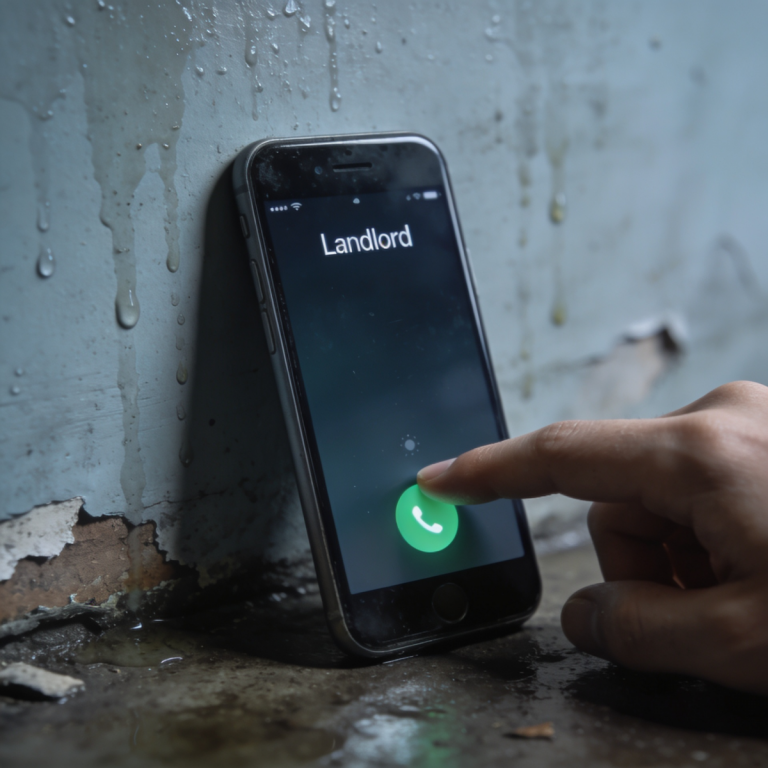
Damp and mould in your rented home is not something you should have to live with. You spotted the dark patches a few months ago. Maybe it started on the bathroom ceiling or crept into the corner of the bedroom. Now there is a smell you cannot shift, and you are wondering whether this is just one of those things or whether your landlord has a legal duty to fix it.
The short answer is: in most cases, your landlord is responsible for damp and mould. The full picture is more nuanced, and with the law having changed significantly since October 2025, it is worth understanding exactly where you stand.
This guide covers everything you need to know, in plain English.
What Is the Difference Between Condensation, Damp and Mould?
These three terms are often used interchangeably but they are not the same thing, and the difference matters. Landlords have historically used the confusion around them to avoid their responsibilities.
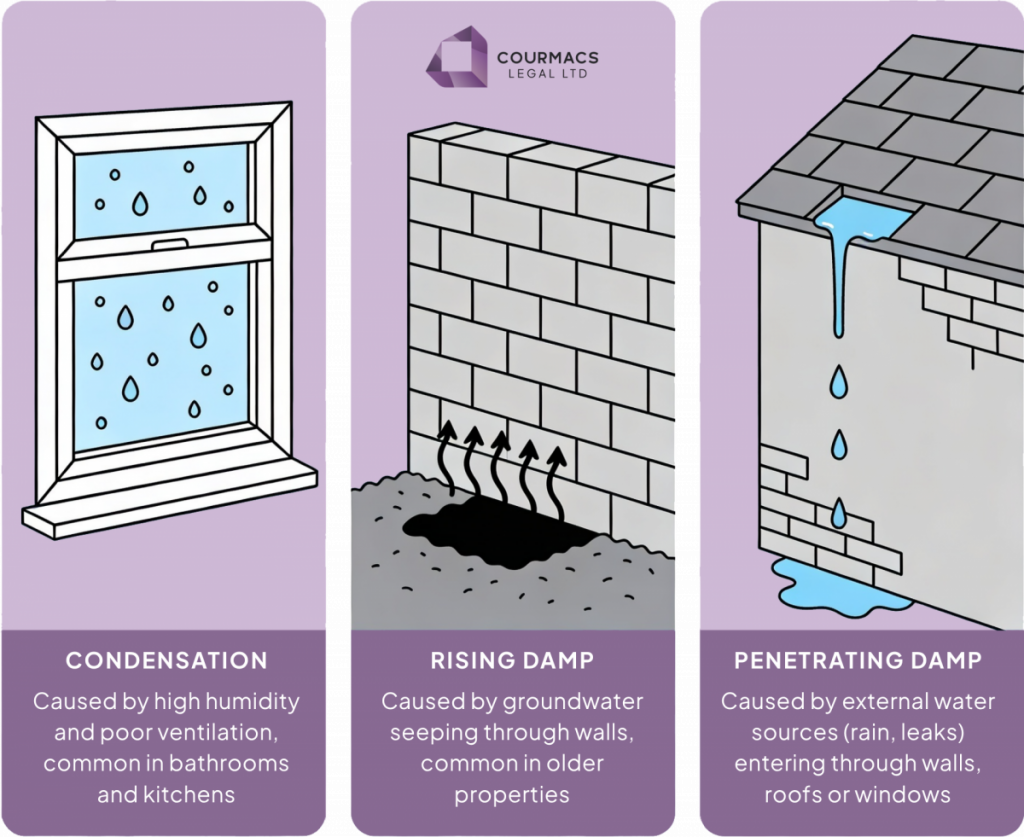
Condensation is moisture in the air that settles on cold surfaces such as windows, external walls and tiles. Some condensation is normal. When a property is poorly insulated, badly heated, or inadequately ventilated, condensation becomes persistent and leads to mould growth.
Damp is the broader term for excess moisture in a building. It can come from condensation, but it can also come from:
- Condensation – moisture in the air settling on cold surfaces, most common in poorly heated or ventilated properties
- Rising damp – moisture travelling up from the ground through walls or floors
- Penetrating damp – water getting in sideways through the structure, including leaking roofs, cracked render, failed window seals, and faulty guttering or plumbing
The diagram below shows how each type gets into your home and where it typically appears.
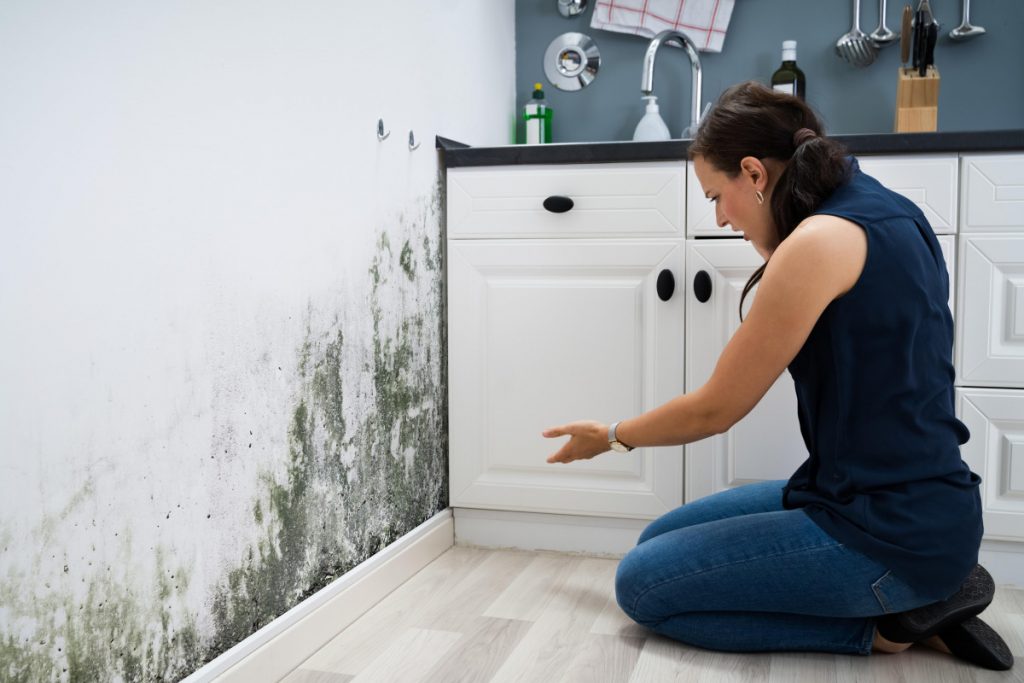
Mould is the visible result of prolonged moisture. Black mould, the most common type found in homes, releases spores that can cause respiratory problems, worsen asthma, trigger skin conditions, and pose a serious risk to children, the elderly, and anyone with an existing health condition.
Condensation is often blamed on tenants, citing things like drying washing or cooking. But persistent mould is rarely a lifestyle issue. If a property is cold, poorly ventilated, or structurally flawed, no amount of window-opening will fix it.
What Does UK Law Say About Landlord Responsibility for Damp?
This is where things have changed considerably, and it is worth knowing your rights in full.
The Homes (Fitness for Human Habitation) Act 2018
The Homes (Fitness for Human Habitation) Act 2018 requires that all rented properties, whether private, council, or housing association, are fit to live in at the start of the tenancy and remain so throughout. Persistent damp and mould that affects your health or the structure of the property is likely to make a home unfit under this law.
If your home is not fit for human habitation, you have the right to take your landlord to court. You do not need to wait for the council to act first.
Section 11 of the Landlord and Tenant Act 1985
Section 11 requires landlords to keep the structure and exterior of the property in repair, and to maintain heating and ventilation systems. If damp is caused by a structural defect such as a leaking roof, cracked render, or failed cavity wall insulation, your landlord has a clear legal obligation to fix it.
Awaab’s Law: What Changed in October 2025
Perhaps the most significant development in recent years is Awaab’s Law, introduced following the tragic death of two-year-old Awaab Ishak in Rochdale in 2020. The law came into force for the social rented sector on 27 October 2025, requiring social landlords to address all emergency hazards and all damp and mould hazards that present a significant risk of harm to tenants within fixed timeframes.
The law forms part of the Social Housing (Regulation) Act 2023 and sets out strict timescales that housing associations and councils must now follow:
Emergency hazard (e.g. dangerous electrical fault, major leak, broken external door)
Significant damp and mould: investigation
Written summary of findings provided to you
Making the property safe from damp and mould
If your home cannot be made safe in time, your landlord must offer you somewhere else suitable to stay until the work is done.
Awaab’s Law currently applies to social landlords only, meaning housing associations and councils. The government has confirmed plans to extend the same protections to private renters through the Renters’ Rights Bill, but this has not yet come into force.
“My Landlord Says It’s Just Condensation” – What Can You Do?
This is one of the most common responses tenants receive, and one of the most frustrating. Since the Housing Ombudsman’s spotlight report on damp and mould in 2021, lifestyle is no longer a valid defence for damp and mould claims in social housing. Regulations now make clear that landlords cannot simply assume the cause is down to how a tenant lives.
Here is a clear action plan:
1. Document Everything Straight Away
- Take dated photographs of every affected area
- Note which rooms are affected and how far the mould has spread
- Photograph any mould that returns after you have cleaned it
- Keep a record of any health symptoms you or your family have experienced
- Hold on to any receipts for damaged belongings
2. Report It in Writing
Always report damp and mould in writing. Email is fine and creates a clear paper trail. State what you have seen, when it started, and that you are requesting an investigation and repairs. Keep a dated copy of everything you send.
3. Quote the Legal Timescales
If you are a social housing tenant, you are entitled to an investigation within 10 working days under Awaab’s Law. Reference this in your correspondence. A landlord who knows you are aware of your rights is far more likely to act promptly.
4. Contact Your Local Council
If your landlord does not respond, your local council’s environmental health team can inspect the property and issue an improvement notice under the Housing Health and Safety Rating System (HHSRS). This applies to both private and social housing.
5. Escalate to the Housing Ombudsman
If you rent from a housing association or council and your landlord has not resolved the issue, you can escalate to the Housing Ombudsman. You will usually need to exhaust your landlord’s internal complaints process first.
Could you be entitled to repairs and compensation?
If your landlord has repeatedly ignored your complaints about damp or mould and you rent from a housing association or council, a specialist no win, no fee law firm may be able to help you get the repairs done and claim compensation for the impact on your home and health. To have a strong case you will need clear evidence that you reported the problem to your landlord and gave them a reasonable amount of time to act.
If that sounds like your situation, we are happy to take a look. There are no upfront costs and no obligation to proceed.
Start a free claim enquiry or call 0330 341 0481When Is Damp the Tenant’s Responsibility?
It is worth being straightforward about this. In some situations, condensation damp can be made significantly worse by how a property is used.
Factors that can contribute to condensation include:
- Not heating the property consistently, particularly in winter
- Drying washing indoors without adequate ventilation
- Cooking without using extractor fans or opening windows
- Keeping rooms closed and unheated for long periods
However, landlords cannot simply assume that damp and mould is caused by a tenant’s lifestyle. If the property lacks adequate heating, insulation, or ventilation to manage everyday living, that is a structural issue for the landlord to resolve.
Tenants should not have to choose between heating their home normally and avoiding mould. If a property cannot cope with ordinary day-to-day activity, the problem is with the property, not the person living in it.
What If Mould Has Damaged Your Belongings?
If damp or mould caused by your landlord’s failure to act has damaged your furniture, clothing, or other belongings, you may be able to seek compensation for those losses as part of a housing disrepair claim.
This is worth documenting carefully:
- Take photographs of damaged items before disposing of them
- Keep receipts or bank statements showing what items cost
- Note when the damage occurred relative to when you first reported the damp
Our guide on how to make a housing disrepair claim covers this in more detail.
A Note on Your Health
If anyone in your household has experienced health problems you believe are linked to damp or mould, such as persistent coughs, breathing difficulties, worsening asthma, or skin conditions, speak to your GP and ask for it to be recorded. This documentation can be highly relevant if the matter progresses to a formal complaint or legal action.
It also matters for how urgently Awaab’s Law applies. Government guidance states that social landlords should consider whether occupiers have vulnerabilities that put them at higher risk. A hazard that would not ordinarily be classed as an emergency may become one where young children or a pregnant person is living in the property.
If you or anyone in your household has a health condition being worsened by damp or mould, make sure your landlord knows this in writing. It affects how quickly they are legally required to act.
5 Key Things to Remember About Landlord Responsibility for Damp
A quick recap before you take action:
- Structural damp is almost always your landlord’s problem – leaking roofs, failed insulation, broken guttering, and plumbing leaks all fall to them
- The law requires your home to be fit to live in throughout your tenancy, not just when you moved in
- Social housing tenants now have firm legal timescales – Awaab’s Law has been in force since October 2025
- Always report in writing and keep copies – this is your evidence if things escalate
- You have escalation routes available – local council environmental health, the Housing Ombudsman, and the courts
Could You Have a Housing Disrepair Claim?
If your landlord has ignored your complaints about damp or mould, or told you the problem is yours to deal with when you do not believe that is fair, you may have grounds for a housing disrepair claim.
At Courmacs Legal, we help council and housing association tenants understand their rights and take action when landlords fail in their legal duties. We work on a no win, no fee basis, so there is nothing to pay upfront and no financial risk to you.
You can find out more about how we work on our housing disrepair claims page, or read our guide on acceptable living conditions in UK rented housing to understand what standards your landlord is legally required to meet.
Could you have a housing disrepair claim?
If your landlord has ignored your complaints about damp or mould and you rent from a housing association or council, you may have grounds for a housing disrepair claim. At Courmacs Legal we work on a no win, no fee basis, with no upfront costs.
Get in touch today for free, no obligation advice. We will let you know honestly whether you have a case worth pursuing.
Start a free claim enquiry or call 0330 341 0481Frequently Asked Questions
Can my landlord blame me for damp and mould?
They may try, but they cannot simply assume it is your fault. Since 2021, the Housing Ombudsman has made clear that lifestyle is not a valid defence for damp and mould cases in social housing. If the property lacks sufficient heating, ventilation, or insulation, responsibility sits with the landlord regardless of how you use the property.
How long does my landlord have to fix damp and mould?
If you rent from a housing association or council, Awaab’s Law now applies. Your landlord must investigate significant damp and mould within 10 working days of your report, provide a written summary of findings within 3 working days of completing the investigation, and make the property safe within 5 working days of the investigation finishing.
What if my landlord does nothing after I report damp?
Make sure you have reported it in writing and kept a copy. If they do not respond within the legal timescales, you can report the issue to your local council’s environmental health department. Social housing tenants can also escalate to the Housing Ombudsman. If the problem is serious and your health has been affected, speaking to a legal adviser about a housing disrepair claim is worth considering.
Does Awaab’s Law apply to private renters?
Not yet. As of 2025, Awaab’s Law applies to social housing tenants only, meaning those renting from a council or housing association. The government has confirmed plans to extend the protections to private renters through the Renters’ Rights Bill, but no commencement date has been set.
Can I claim compensation for belongings damaged by damp or mould?
Yes, potentially. If your landlord’s failure to carry out repairs has caused damage to your furniture, clothing, or other possessions, you may be able to include a claim for those losses as part of a housing disrepair case. Document the damage with photographs and keep any receipts before throwing anything away.